Weekly property law round-up, 26 February 2024 - 3 March 2024
- Mar 6, 2024
- 5 min read
Overview
Just one case this week: in M Salazar Properties Pty Ltd v Jeffs [2024] QSC 9, the Supreme Court of Queensland dealt with an application for a statutory right of user (easement), allowing the applicant to build a drain through a neighbour’s property. Aside from showing how the court balances the property rights of neighbours, and how it assesses the proper compensation for the grant of an easement in such cases, the decision is worth a read just for the applicant’s conduct, which was strongly criticised by the Court.
Supreme Court of Queensland (Hindman J)
EASEMENTS – Statutory easement sought over servient land for stormwater drainage – Whether compensation offered for burdening servient land was sufficient – Whether refusal of owner of servient land was unreasonable – Orders sought for court to determine terms of easement
Background facts
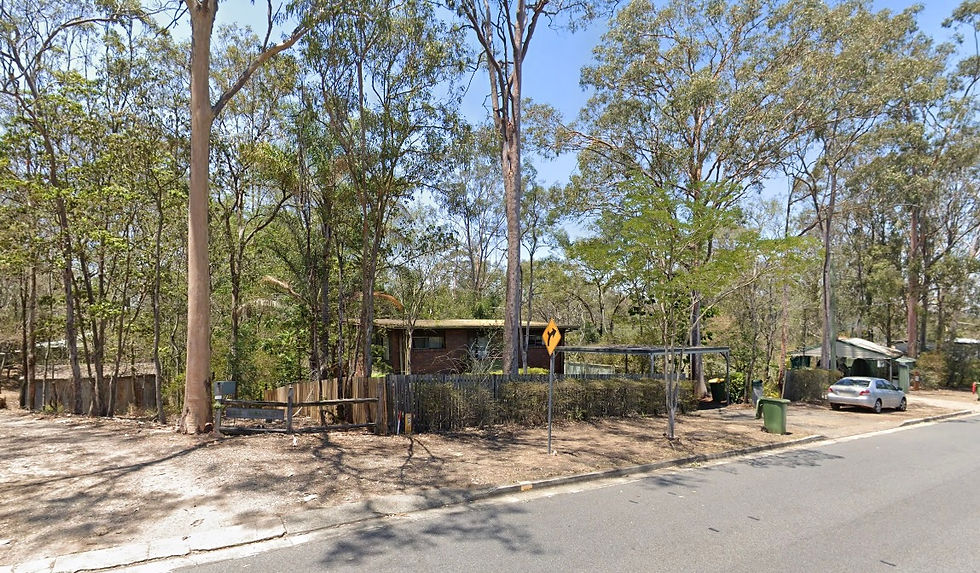
This decision concerned an application for the Court to grant a statutory easement in favour of the plaintiff’s property (the ‘dominant’ land), over part of a neighbouring property (the ‘servient’ land). Both properties were parcels of residential land in Bellbird Park, a suburb about 30km south west of Brisbane. The applicant wished to build additional residences on its lot, and in order to do so, needed to run a stormwater drain through a neighbouring property, owned by the respondent, to council drains on a nearby road. The respondent refused.
The provision
The application was brought under section 180 of the Property Law Act 1974 (Qld), which allows the Court to impose statutory rights of user in respect of land where:
it is consistent with the public interest that the dominant land should be used in the manner proposed;
the owner of the servient land can be adequately compensated for any loss or disadvantage they suffer from the imposition of the obligation; and
either the owner of the servient land has unreasonably refused to accept the imposition of the obligation, or no one with the capacity to accept it can be found.
While there is no exact equivalent to this provision in Victoria, the closest equivalent is the power of an owner to apply to VCAT to acquire or remove an easement under s 36 of the Subdivision Act 1988 (Vic). Subdivisions may also be created upon the registration of a plan of subdivision or consolidation, per s 12 of the Subdivision Act and s 98 of the Transfer of Land Act 1958 (Vic).
Why easements may be needed
Aside from drainage, there are several situations in which the owner of dominant land may need to use neighbouring land, such as to access their own property, or to run power, water or other utilities to their home or business. The applicant’s plan to build several townhouses on what was previously subdivided as a single residential lot is an example of the changing patterns of land use in Australian cities that will often precipitate a need for a new easement. Denser housing typically needs additional infrastructure, and this need was not one that town planners anticipated in the age of quarter-acre (or even eighth-acre) blocks.
Ideally, the owner of the dominant land can essentially purchase an easement from the owner of the servient land. However, if either party is unreasonable, or the parties otherwise cannot reach agreement, the owner of the dominant land may need to apply to a court (as in Queensland) or tribunal (as in Victoria).
The applicant’s conduct prior to and during the proceedings
The Court granted the easement, as the statutory requirements had been made out, but were critical of the applicant’s conduct: ‘had the applicant acted in a more neighbourly and reasonable way, this application likely would never have been necessary as the consent of the respondent likely would have been obtained to a reasonable easement over his lot’.
The applicant’s conduct (or perhaps more accurately that of its director, Ms Salazar) was indeed quite remarkable. The applicant made six separate offers to the respondent, most of which were said to expire in mere days and contained various conditions that the Court considered were unduly onerous (and therefore were reasonably refused by the respondent). Even before the first offer expired, Ms Salazar wrote to the respondent threatening to issue legal proceedings the following day, and attaching a draft originating process and affidavit.
After making a second offer, the applicant emailed a letter to the respondent’s solicitors HWL Ebsworth. Peculiarly, it was not addressed to the solicitors at the firm with carriage of the file (although it was copied to them, and also to the respondent personally), but rather to the firm’s national managing partner, Juan Martinez, who her Honour observed ‘had no involvement whatsoever with the respondent’s file’.
The letter itself was ‘approximately twelve pages long’, ‘replete with rudeness, unprofessionalism, uneducated commentary, and scandalous allegations’, and could ‘only be construed as an attempt to bully and intimidate’. It included various criticisms of the two solicitors with carriage of the file, as well as some drafting choices that could be charitably described as ‘American’ in tone, such as referring to ‘baldly bellicose and impotent statements’, ‘sending your client haplessly into the teeth of the Supreme Court’, and a warning that the solicitors ought be more careful ‘as to what falls from their lips’.
Statutory requirements were made out, despite the applicant’s earlier conduct
Despite the applicant’s conduct, the Court observed that its sixth offer was substantially different to the first five. Rather than setting the terms of the easement, it largely left these to be determined by the Court, aside from defining the geographic scope of the easement and the temporary construction zone, and fixing sums for some categories of compensation.
As the Court was able to determine the terms of any grant, it held that this offer was reasonable, and had been unreasonably refused by the respondent. That being said, the Court made no criticism of the respondent for his refusal, and noted that he had acted ‘entirely understandably and appropriately’ throughout.
The Court held that there was no real viable alternative to the easement aside from running the drain through another neighbour’s property, with the development being consistent with the public interest, and that the drain would not have an unreasonable impact on the respondent’s property (being mostly underground). The applicant’s conduct, although very unimpressive, did not rise to the level that it should disentitle it to the order.
As such, the Court granted a statutory right of user under s 180 of the Act for the drain, and a licence for the duration of the construction process. As to compensation, this was said to comprise the following categories: (a) diminished market value of the servient land, including its potential usage; (b) compensation for the loss of proprietary rights; (c) costs to the owner of the servient land; (d) loss of amenity, security, privacy and quiet enjoyment of the servient land, and any increased nuisance to the owner of that land (such as from the construction and maintenance of the drain).
Such compensation was assessed at $63,000 in total, with the majority of it comprising the costs paid by the respondent in the proceedings, which the Court considered were properly payable by the applicant, as the respondent’s refusal of the first five offers had been reasonable.
The property: